
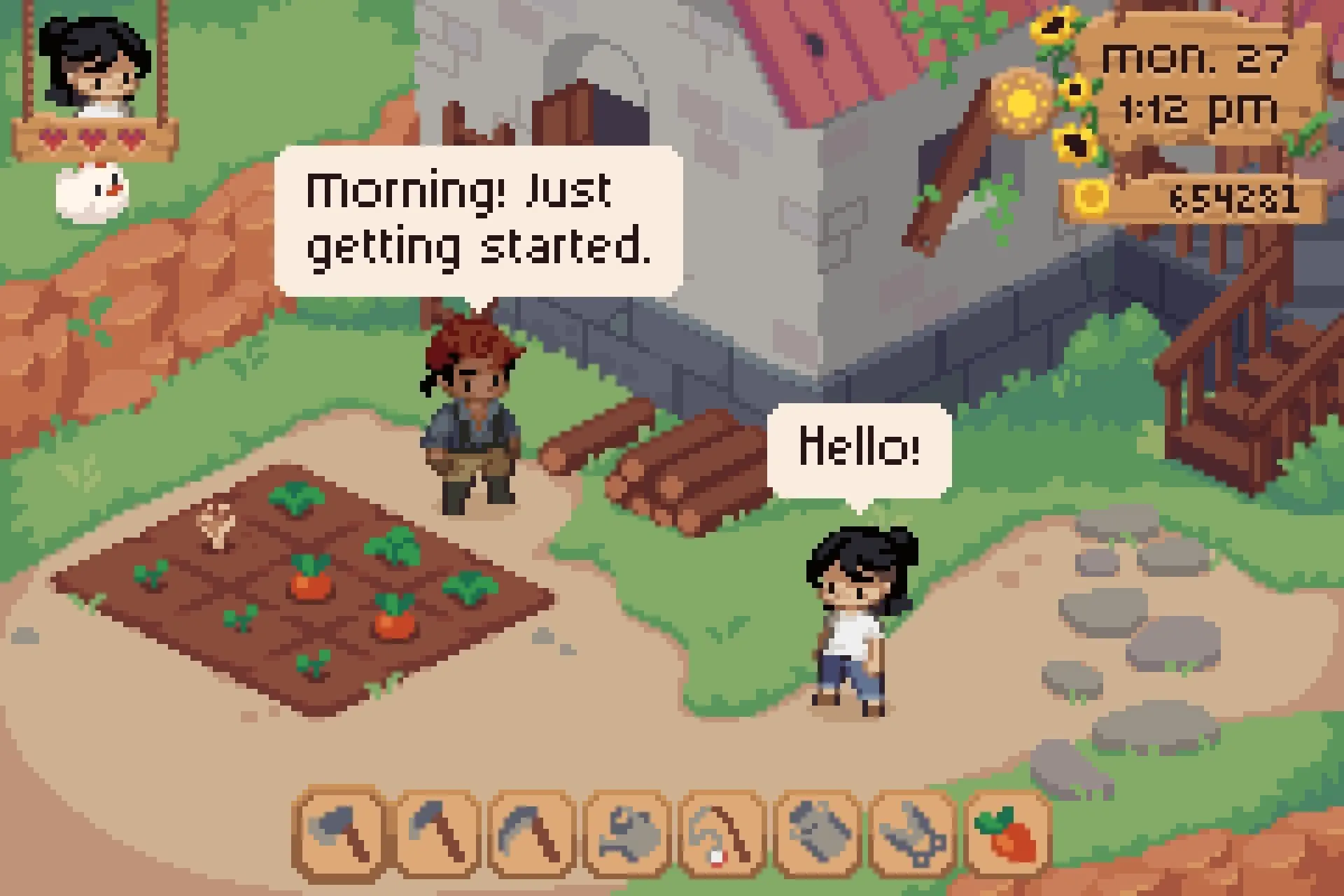
A look at the designs that changed
Alongside its September release announcement, Perfect Garbage published a retrospective on building Grave Seasons. The article compares prototypes and later designs across farming, characters, exploration and dialogue testing. This report focuses on those changes. The separate release report explains the new date and its implications.
Characters changed in proportion and detail
The team describes earlier, smaller character designs and the development of dialogue avatars alongside animated sprites. It explains that scaling the sprites differently enabled more complex actions and detailed animation. Prototype pictures in that discussion are development history, not a second set of character appearances guaranteed to be selectable in the final game.
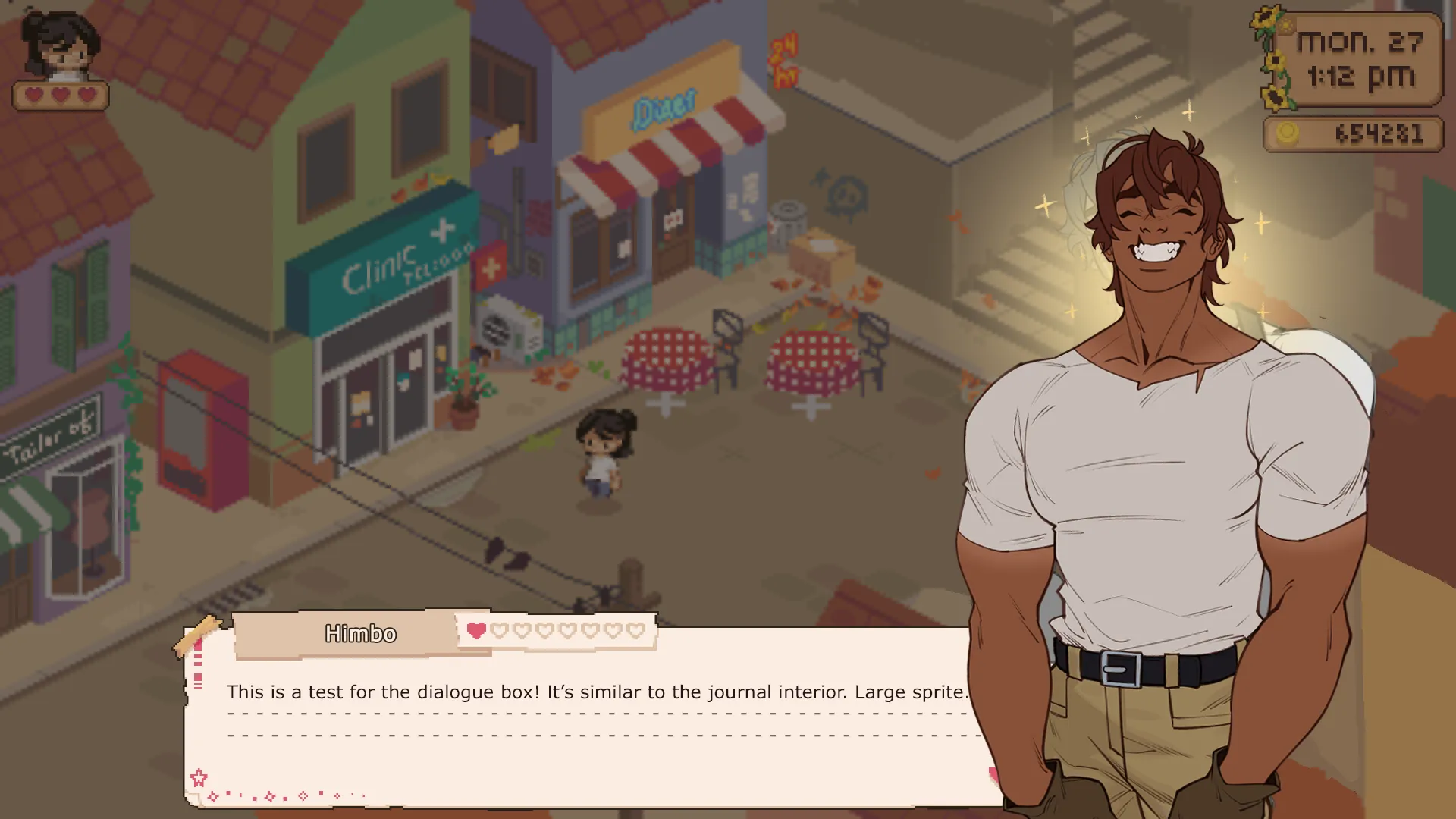
An interaction prototype gave way to entering spaces
The retrospective describes an early pickpocketing mechanic and the difficulty of making relative positioning readable in an isometric world. The later direction uses an unusual tool, the crowbar, in situational breaking and entering. This helps explain why homes and hidden spaces became more important to exploration. The mechanic overview separates that current public premise from the discarded prototype.
The Local District was revised for navigation
The developers also describe substantial revisions to town layouts. An earlier version could be difficult to navigate; later work aimed to retain winding roads and vertical character while making traversal clearer. The existence of prototype layouts is one reason not to turn every old screenshot into a current map. The region index keeps named places separate from unverified routes.
How to read a development retrospective
A retrospective is useful evidence for why a design changed, but its earlier systems should not become present-tense tutorials. The article also describes content being locked while polishing, bug fixing and port work continue. That is not a statement that the game is already released or that every prototype shown will be included. Follow the release page for current availability and gameplay for the announced systems.
Sources & editorial scope
Sources checked 2026-10-07. This article covers official announcements, not a first-hand gameplay test. Older source material retains its original release context.